
Florida Statute 768.0706, part of HB 837 (2023), says the owner or principal operator of a multifamily residential property that substantially implements the security measures in the statute has a presumption against liability for criminal acts on the premises committed by third parties — people who are not employees or agents of the owner or operator.
Two things to understand up front:
- It is a presumption, not immunity. A crime victim can still bring a claim and try to rebut it. What the statute does is shift the starting position in your favor — if you can show you did the work.
- The burden is on you. The statute says so directly: the owner or principal operator has to demonstrate substantial implementation. That is why documentation matters as much as the measures themselves. An assessment report, lighting measurements, training records, and work orders are what prove the work was done.
The statute covers a “multifamily residential property”: a residential building, or group of residential buildings — apartments, townhouses, or condominiums — consisting of at least five dwelling units on a particular parcel.
That includes condo associations, not just apartment complexes. Meeting the statute is voluntary — no owner is legally required to do it — but if your property has five or more units on one parcel, meeting these requirements is how you earn the presumption against liability.
1. Security cameras at entry and exit points
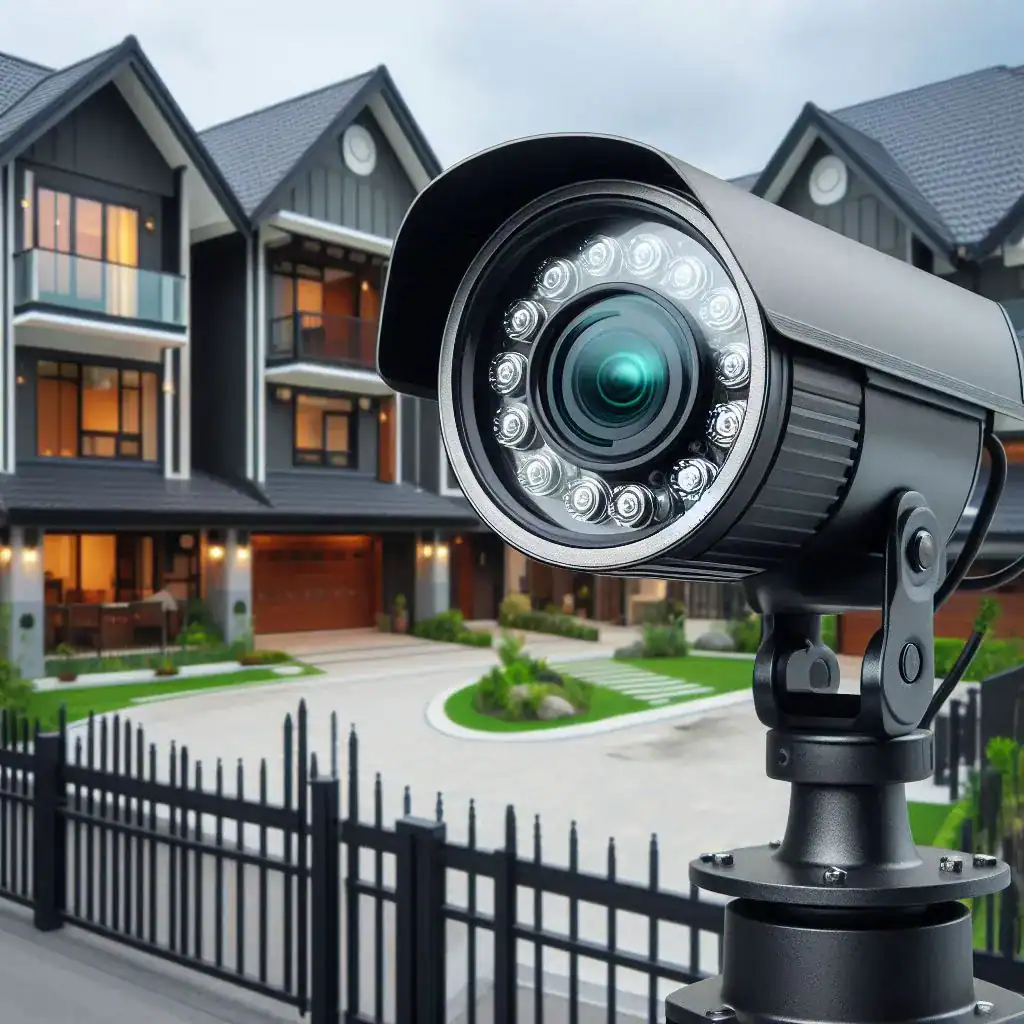
The statute requires a camera system at points of entry and exit that records video and maintains it retrievable for at least 30 days, to assist in offender identification and apprehension.
What I check: do the cameras actually cover the entries, or just the parking lot? Is the picture usable at night? Can someone on staff actually pull footage from 20 days ago — or does the system overwrite in a week and nobody noticed? A camera that is installed but not recording, or recording over itself, does not meet the standard in practice.
2. Parking lot lighting: 1.8 foot-candles

The statute requires a lighted parking lot at an average of at least 1.8 foot-candles at 18 inches above the surface, from dusk until dawn or controlled by a photocell or similar device.
This is the one measure with a number attached, and it is the one most often missed — because it has to be measured, not eyeballed. I measure lighting on site at night with a light meter: the average across the lot, not the brightest spot. Fixtures burn out, trees grow over them, and a lot that looked fine at installation can measure well under 1.8 fc a year later. Note that 1.8 foot-candles is the number the statute sets for this legal test; it is not a lighting-design standard.
3. Walkway, laundry room, common area, and porch lighting
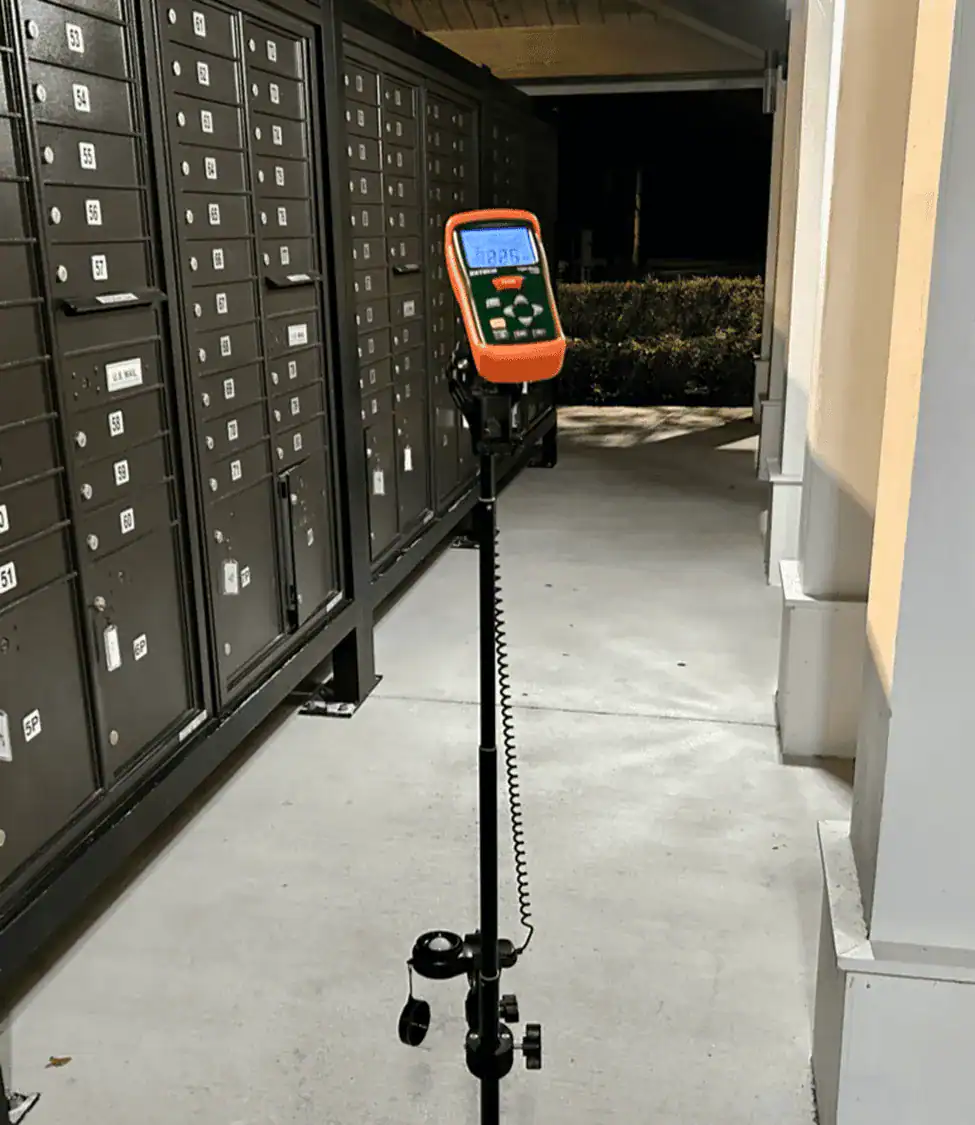
Lighting in walkways, laundry rooms, common areas, and porches must be illuminated from dusk until dawn or controlled by a photocell.
What I check: burned-out fixtures, timers and photocells that no longer work, and areas — stairwells, laundry rooms, back walkways — where the lighting was never adequate to begin with. These are the places residents walk after dark, and they are the places that get overlooked.
4. A 1-inch deadbolt on each dwelling unit door
At least a 1-inch deadbolt in each dwelling unit door.
What I check: a representative sample of unit doors — deadbolt present, throw length, strike plate secured, frame solid. A deadbolt in a rotted frame is not security.
5. Locking devices on windows, sliding doors, and other doors
A locking device on each window, each exterior sliding door, and any other doors not used for community purposes.
What I check: sliding glass doors in particular — their locks wear out, and ground-floor units are the ones that matter most. Windows on lower floors, and doors to storage and utility areas that should be locked but aren’t.
6. Locked pool gates with key or fob access
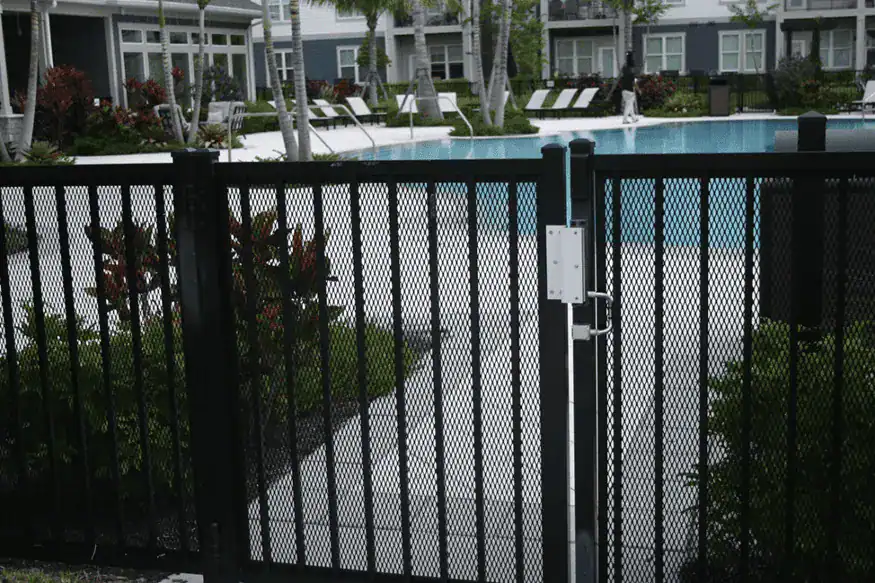
Locked gates with key or fob access along pool fence areas.
What I check: whether the gate actually latches and locks, whether the closer works, and whether it is propped open. A pool gate that is routinely propped open with a rock is the most common single deficiency I find.
7. Peepholes or door viewers
A peephole or door viewer on each dwelling unit door that does not include a window or does not have a window next to the door.
What I check: missing viewers, viewers painted over, viewers installed at a height nobody can use. Small item, easy fix, and it is on the list.

A CPTED (Crime Prevention Through Environmental Design) assessment looks at how the physical environment of a property affects crime opportunity. My assessments evaluate six principles: natural surveillance, natural access control, territorial reinforcement, activity support, image and maintenance, and site/target hardening. Under the statute the assessment must be:
- No more than 3 years old — and you must remain in substantial compliance with it.
- Performed by a law enforcement agency or a Florida CPTED Practitioner designated by FCPTI.
My assessment includes daytime and nighttime observations, lighting measurements, staff interviews, and a review of procedures — then a written report with findings and recommended corrective actions. The report is both the roadmap for fixes and part of the documentation that shows the work was done.
If your last assessment is more than 3 years old, you need a new one. If it was done by someone who is not a designated FCP or a law enforcement agency, it does not count for the statute.

The statute requires proper crime deterrence and safety training for employees — training that familiarizes them with the security principles, devices, measures, and standards in the statute. New hires must receive it within 60 days of hire, and the training must be reviewed at least every 3 years and updated as necessary.
I provide this training for multifamily staff, including new-hire sessions and the 3-year review. Training done once and never refreshed does not meet the standard — and in my experience, it is the requirement most often forgotten after the initial push.
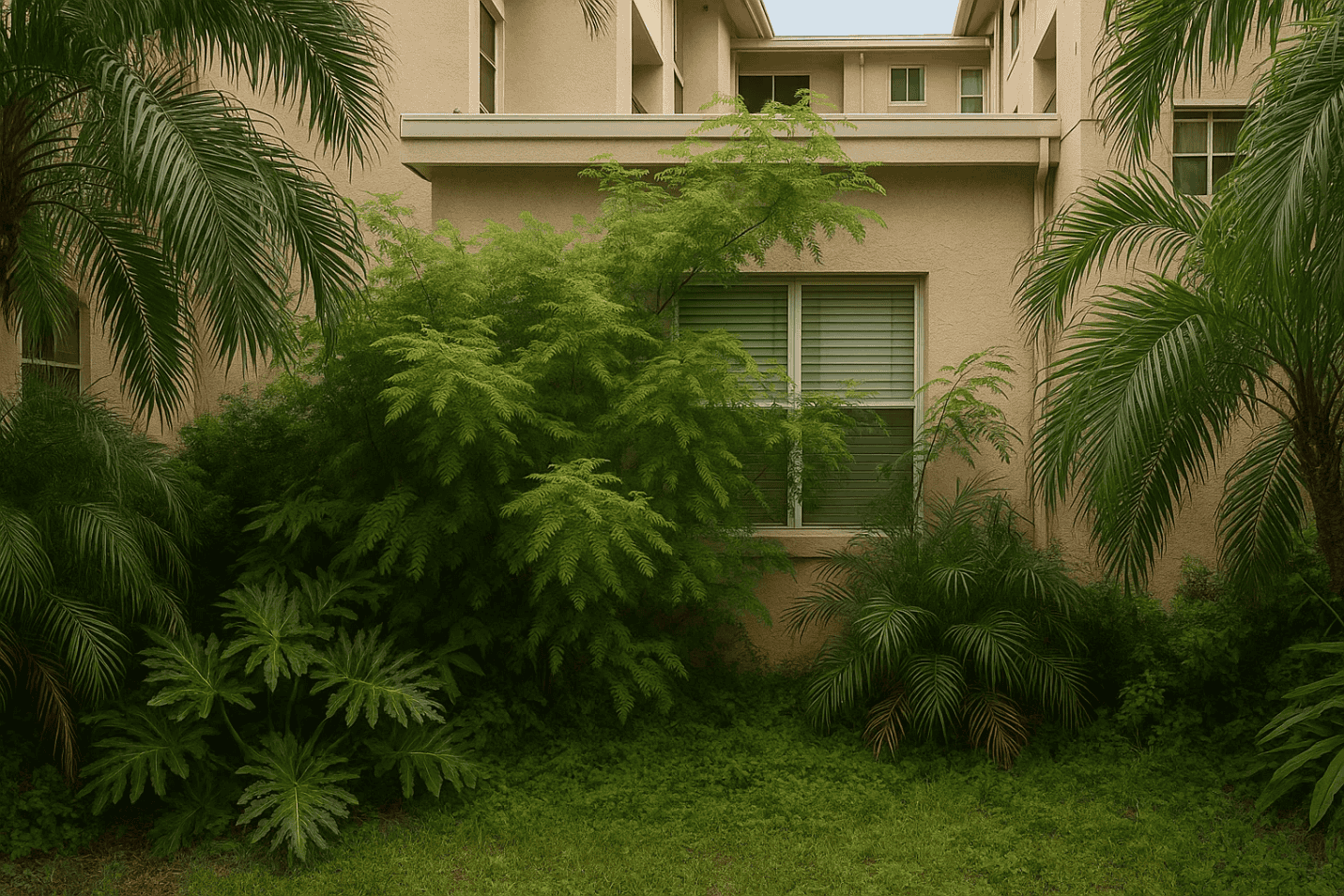
Across multifamily assessments, the same gaps come up again and again:
- Parking lot lighting that measures under 1.8 fc — usually a few dead fixtures, not a design problem.
- Cameras installed but footage not retrievable for 30 days.
- Pool gates propped open or with broken closers.
- Training completed once, never refreshed, new hires never trained.
- A CPTED assessment more than 3 years old, or done by someone not qualified under the statute.
- No file: fixes made but nothing documented.
Most of these are inexpensive to correct. The expensive version is finding out about them after an incident.

Ron Vosatka, FCP, is a Certified Florida CPTED Practitioner and a contract instructor for the Florida Crime Prevention Training Institute of the Office of the Attorney General, training law enforcement professionals in crime prevention. He previously served over a decade as Director of Community Security for the Jewish Federation of Palm Beach County. Florida Security Assessments conducts CPTED and physical security assessments for apartments, condominiums, businesses, schools, and places of worship statewide, plus lighting surveys and staff safety training.
Florida Security Assessments, LLC
11582 SW Village Parkway, Unit #540, Port St Lucie, FL 34987
Phone: 561-320-3385
Email: info@floridasecurityassessments.com
Call or email to schedule a preliminary review of your property.
This page is general information about Florida Statute 768.0706, not legal advice. For questions about how the statute applies to a specific property or claim, consult a Florida attorney.